

odontology
by Leif Kullman
Bitemarks
The fingerprints of the mouth
Bitemarks have many times been important to solve different criminal cases. Cases have been reported where bitemarks have been found in different foodstuffs left in the place of a crime and the bitemarks have then connected a suspected to the crime place. The marks are also often seen in assault and sex crimes and can then be situated in either the assailant or in the attacked person and may be essential to convict a person having performed the offence (see example of a bite and suction
mark photograph downunder).
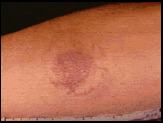
It is perhaps easy to understand that evaluating and judging in bitemark cases, being an expert odontological witness, is very difficult especially if the bitemarks are situated in the skin and soft tissue of a human body. The skin and surrounding soft tissue have large capabilities to quickly normalise after different injuries.
Recommendations
Bearing in mind the existing difficulty with bitemark cases, there is a great need among forensic dentists about the way to handle them. In USA the Board of Forensic Odontology which organised in 1976 (ABFO) have compiled guidelines for the recommended methodology during bitemarks investigations. From these and other literature in this subject the following principles can be derived :
Methods to preserve the bitemarks: photographic documentation (with a measuring scale included) saliva swabs impressions of the bitemark (to make models)
Evidence collection of suspected dentition dental records of suspected persons photographic documentation clinical investigation dental impressions saliva samples
Methods of comparing bitemark and technical aids for the analysis generation of different overlays such as acetrate tracing from models of the suspect x-ray film overlay created from radiopaque material applied to the wax bite translumination of tissue computer enhancement of the bitemark and/or teeth stereomicroscopy scanning electron microscopy videotape and of course calliper manual measurements
Don t forget to describe
Location of the bitemark. For example: Fixed or mobile skin, chocolate and so on And describe also shape (round, ovoid etc.), colour (red, purple etc.), size and type ( contusion, abrasion, laceration etc.) of the injury.
The bitten detective
I was some years ago called as an expert witness to a trial in Stockholm. The case was an assault story. A police detective saw a dope peddler carry out an affair with junk in Sergels torg, in the centre of Stockholm. He rushed up to catch the peddler in the act and during the small fight the peddler bite the detective in the hand. Afterwards in the court when the peddler finally was condemned, he accused the policeman for assault. The policeman in his turn accused the peddler for biting him. The peddler know that he was HIV- infected. and had, according to the policeman, an intention to transmit the infection.
I had performed an investigation of the bitemarks and they had been very faint and subtle. We had taken some photographs (colour photographs with a millimetre scale inserted) of the area in the arm of the policeman, but decided not to take any impression. The injuries in the skin had been so subtle, that I could not even state that it really was a bitemark. Of course I have had some discussions with some colleagues about this case and the report and we had agreed about the statement. It was not possible to declare that these marks were bitemarks. The marks in the hand could also have been scratch injuries for example, created during the fighting. I had made a written testimony about this. Accordingly I was very surprised for my nomination as an expert witness. This was connected with the importance for the policeman, to have the peddler judicial convicted of having an intention to give him HIV and thereby putting him in mortal danger. My written statement was not enough for the jury members, who are completely laymen in evaluating different kinds of injuries in criminal cases. I could also have been more clear from the beginning, explaining more clearly that it is impossible to declare that bitemarks are made with a specific intention to create an infection in the attacked person. With me as a witness they got an opportunity to have more questions explained and I could confirm and specify my written statement.
Leif Kullman

